community
Getting Around Brisbane 2026: Public Transport, CityCat Ferries and Road Network Guide
A general explainer on how Brisbane and South East Queensland move, from the river-shaped road network and CityCat ferries to TransLink buses, Queensland Rail trains and the airport links.
How we reported this
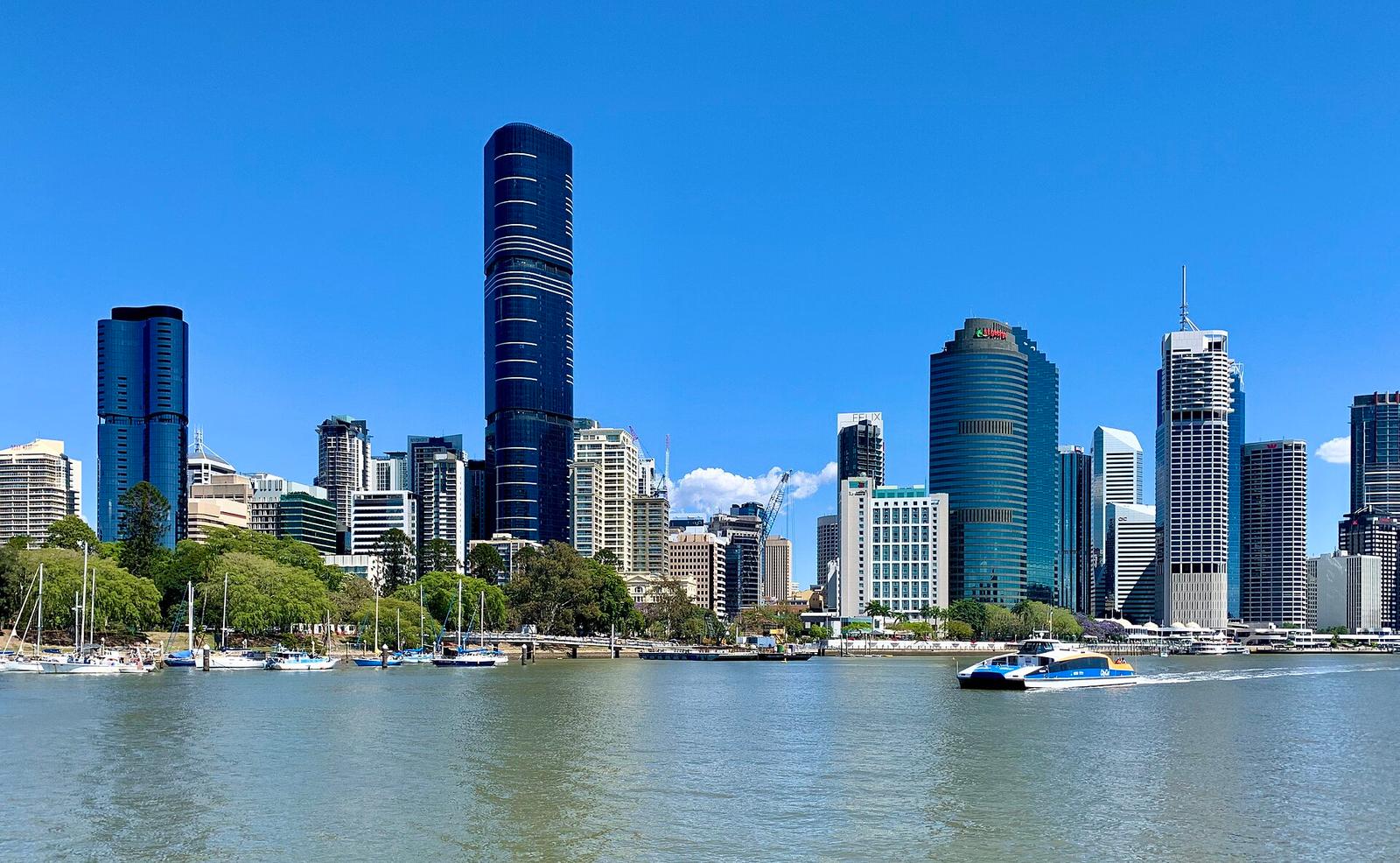
This is a general explainer about how people get around Brisbane and its surrounding region, not financial, business or travel advice, and detailed figures such as fares, timetables and project costs change over time, so always check the relevant authority before relying on specifics. What makes Brisbane distinctive is that the city is built around the winding Brisbane River, which loops back on itself repeatedly and divides the inner suburbs into a series of peninsulas. That single geographic fact shapes almost everything about local travel: bridges are precious, the river itself is used as a transport corridor, and journeys that look short on a map can involve a long detour to the nearest crossing. Understanding the river is the first step to understanding how Brisbane moves.
The road network reflects that river geometry. The Pacific Motorway (the M1) runs south towards the Gold Coast and is the spine of the busy southern corridor, while the Bruce Highway heads north towards the Sunshine Coast and beyond. The Gateway Motorway, carried over the river by the Sir Leo Hielscher Bridges, forms an eastern bypass linking the north and south and providing a direct route to Brisbane Airport and the Port of Brisbane. The Western Freeway and the Centenary Motorway serve the western suburbs and Ipswich direction, and the Inner City Bypass and the Clem7, Legacy Way and Airport Link road tunnels help traffic skirt or cross the congested inner city. The Queensland Department of Transport and Main Roads is the authority responsible for state-controlled roads and motorways, while Brisbane City Council manages the large local street network within the city.
Public transport across Brisbane and South East Queensland is coordinated under the TransLink network, overseen by Transport and Main Roads, which brings buses, trains and ferries onto a single ticketing and information system. Buses do the heavy lifting, and Brisbane is unusual in Australia for its dedicated busways, including the South East Busway, the Northern Busway and the Eastern Busway, which let buses run on grade-separated roadways largely free of general traffic. Brisbane City Council operates a large share of the city's bus services. Rather than a tram or light rail system, the inner city is also served by the Brisbane Metro, a high-frequency, high-capacity bus-based rapid transit project using electric vehicles on upgraded busway corridors, an initiative led by Brisbane City Council.
On the water, the council's CityCat and ferry services are a genuinely iconic part of Brisbane life. CityCats are fast catamarans that run along the Brisbane River between terminals stretching across the inner suburbs and out to the University of Queensland, complemented by cross-river ferries and the free CityHopper service in the central area. Because the river is both an obstacle and a highway, ferries are not just a tourist novelty but a practical commuting option for riverside suburbs, and Brisbane City Council has progressively renewed and expanded its vessel fleet and terminals over the years.
Heavier rail connections are provided by Queensland Rail's Citytrain network, an electrified suburban system that radiates from the central city through stations such as Central, Roma Street and Fortitude Valley out to suburbs and satellite centres including Ipswich, Caboolture, Cleveland, Shorncliffe, Ferny Grove and beyond, with longer regional and interstate services also operating from the city. The region is delivering Cross River Rail, a major new rail line featuring a tunnel under the river and the central business district with new underground stations, a project intended to relieve the long-standing bottleneck where most lines historically funnelled across a single inner-city river crossing. Travellers can pay across buses, trains and ferries using the go card smartcard or contactless payment under the TransLink system.
Brisbane Airport, operated by Brisbane Airport Corporation, sits on the bayside to the city's north-east and has separate domestic and international terminals connected to the city by the Airport Link road tunnel and by the Airtrain rail service, which runs on the Citytrain network and also continues south to the Gold Coast. The airport is one of Australia's major gateways and a significant local employment hub in its own right. Intercity and interstate travel from Brisbane also flows along the M1 to the Gold Coast and the Bruce Highway to the Sunshine Coast, by long-distance coach, and by rail and air links to regional Queensland and other capital cities.
Typical commuting patterns are strongly shaped by the city's growth outward into South East Queensland. Large numbers of people travel into central Brisbane from the southern Logan and Gold Coast corridor, the northern Moreton Bay and Caboolture corridor, and the western Ipswich corridor, which is why the motorways, busways and rail lines along those axes carry such heavy peak loads. Many workers combine modes, driving or taking a bus to a station or busway stop and continuing by train or rapid transit, while inner-suburban residents lean more heavily on buses, ferries, cycling and walking given the shorter distances and limited parking. As one of Australia's fastest-growing major regions, Brisbane continues to invest in active transport, including riverside bikeways and pedestrian bridges, alongside the larger road and rail projects.
Because Brisbane sits at the heart of an expanding region preparing to host major international events, transport planning here is unusually forward-looking, and projects, routes and services are regularly reviewed and updated. For current and authoritative detail, the best sources are the Queensland Department of Transport and Main Roads and its TransLink service for state roads and public transport, Brisbane City Council for local roads, buses, the Brisbane Metro and ferries, and Brisbane Airport Corporation for airport access. Treating those bodies as the primary references is the most reliable way to keep up with a network that keeps evolving as the city grows.
Sources: TransLink (Queensland public transport network), Queensland Department of Transport and Main Roads, Brisbane City Council, Cross River Rail Delivery Authority, Brisbane Airport, Queensland Rail.