news
Brisbane 2032 Olympics: $7.1B investment transforms city with 84,000 new seats
From a $7.1 billion infrastructure bill to 84,000 new seats across rebuilt venues, the raw data behind the Brisbane Olympics tells a story of transformation that is already rewriting postcodes.
How we reported this
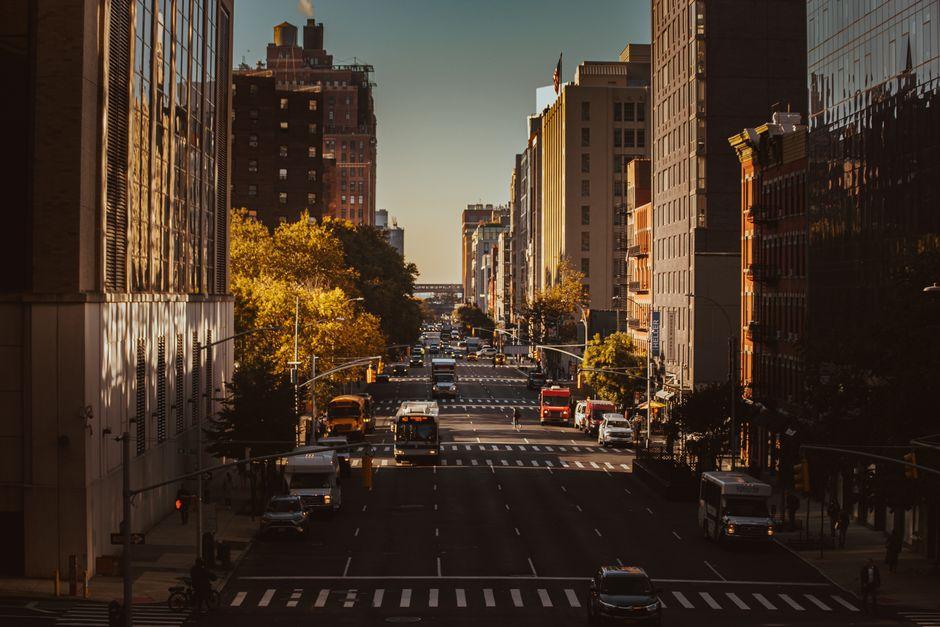
The Queensland government has committed $7.1 billion in public infrastructure spending directly tied to the 2032 Brisbane Olympic and Paralympic Games, and not a single athlete has yet set foot on a starting block. Six years out, the construction pipeline is the real event, and the numbers shaping southeast Queensland's next decade are already locked in.
Why does this matter right now? Because the infrastructure decisions being finalised through mid-2026 will determine which suburbs win and which ones get left behind. The Cross River Rail project, a $7.2 billion underground line connecting Dutton Park to Roma Street, is scheduled to carry its first passengers in late 2026, more than five years before the Games open on 23 July 2032. Every planning decision made between now and Christmas will ripple outward from that corridor for decades.
Venues, Dollars and the Gabba Equation
The rebuilt Gabba at Woolloongabba remains the centrepiece, and the most contested number in the whole program. The state government's revised estimate for the new 50,000-seat stadium sits at $2.7 billion, up from the original $1 billion figure floated when Brisbane first won the hosting rights in 2021. That blowout has fuelled sustained tension between the LNP government and Brisbane City Council, with Lord Mayor Adrian Schrinner publicly questioning the spend-per-seat arithmetic as recently as June. The venue is scheduled to host the opening and closing ceremonies.
Beyond the Gabba, the Queensland Sports and Athletics Centre at Nathan is pencilled in for a $480 million refurbishment. The Brisbane Aquatic Centre at Chandler, which last hosted major international competition during the 1982 Commonwealth Games, will receive $271 million in upgrades. Sleeman Sports Complex at Chandler is also on the works list, part of a cluster of facilities in Brisbane's eastern suburbs that collectively handle 14 of the 32 sports on the 2032 program.
The Athletes' Village in Northshore Hamilton will eventually convert into 10,000 residential dwellings post-Games, making it one of the largest single urban renewal projects in Australian history. Hamilton's Kingsford Smith Drive is already carrying an extra 18,000 vehicle movements per day compared to 2019 traffic counts, according to Brisbane City Council data, a figure transport planners say will double again once construction workers flood the precinct at peak build in 2028 and 2029.
The Population Equation the Olympics Can't Ignore
Southeast Queensland is absorbing roughly 60,000 new residents per year, driven largely by migration from New South Wales and Victoria. The Olympic Infrastructure Authority, the state body overseeing delivery, is working from a projection that greater Brisbane's population will reach 3.1 million by Games time, up from approximately 2.6 million today. That pressure is concentrating most acutely in the Logan and Ipswich development corridors, where land releases are running two years behind projected demand.
Property values in the Woolloongabba and Kangaroo Point precinct have risen 34 percent since Brisbane's Olympic selection was confirmed in July 2021, according to CoreLogic figures through the March 2026 quarter. The median house price in Woolloongabba now sits at $1.42 million. In Yeronga, directly south along the Cross River Rail alignment, it has crossed $1.3 million for the first time. First home buyers have largely retreated from both suburbs.
The practical reckoning for Brisbane residents comes in three stages. Cross River Rail openings in late 2026 will test whether the city's transit network can handle the new load. The 2027 FIFA Women's World Cup, which brings games to Suncorp Stadium on Lang Park, serves as a dress rehearsal for crowd management, ticketing systems and transport logistics. Then from 2029, the Olympic precinct construction enters its final and most disruptive phase, with Kessels Road and Ipswich Road both flagged for major works-related restrictions. Residents from Annerley to Moorooka should expect that disruption to land well before the torch does.