Brisbane Property Market 2024: $780k Sweet Spot Guide
Interstate buyers fleeing Sydney and Melbourne are reshaping Brisbane's $780k market. Discover which suburbs and Olympics corridors offer real growth potential in 2024.
Interstate buyers fleeing Sydney and Melbourne are reshaping Brisbane's $780k market. Discover which suburbs and Olympics corridors offer real growth potential in 2024.
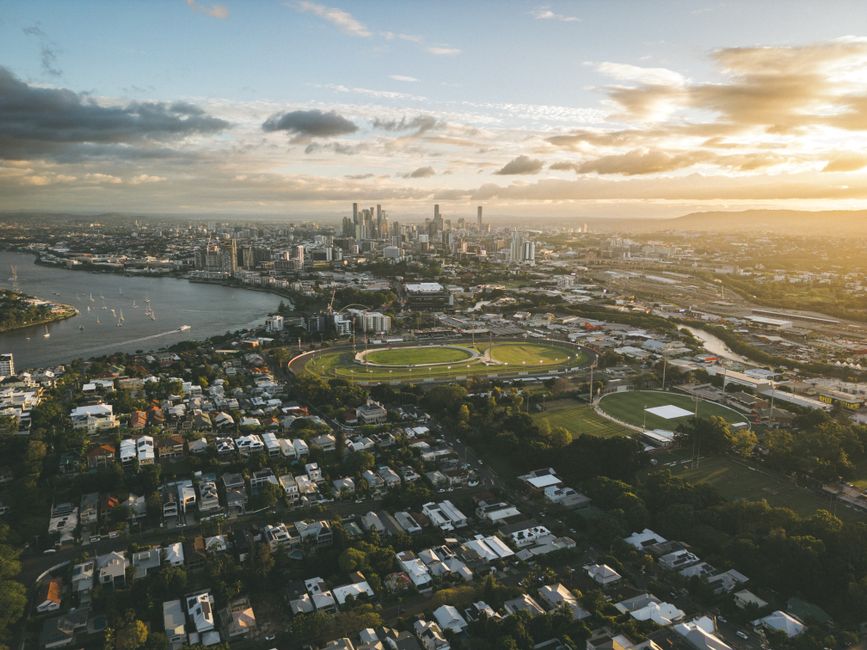
Brisbane's property market is at a crossroads. With the state median hovering around $780,000, the city is experiencing a peculiar split personality: outer suburbs booming while established inner precincts plateau, and savvy buyers increasingly hedging their bets on infrastructure-linked growth rather than traditional blue-chip addresses.
The Olympics legacy is reshaping investor behaviour in ways that extend far beyond the Games themselves. Transport corridors feeding into the Games precincts—particularly around Fortitude Valley, South Bank, and the northern growth axis through Chermside to Sandgate—are attracting attention from interstate migrants fleeing Melbourne and Sydney's frozen markets. Real estate agents report a 34% uptick in inquiry from Victoria and New South Wales since April, with many citing Brisbane's relative affordability and post-Olympic infrastructure as drawcards.
But here's the twist: while prestige suburbs like Ascot and Hamilton have historically anchored Brisbane's property narrative, it's the $600,000-to-$850,000 bracket in mid-ring suburbs that's driving genuine momentum. Suburbs like Coorparoo, Camp Hill, and Auchenflower are seeing multiple offers and extended negotiations—a stark contrast to the stalled auction markets down south.
The outer suburbs tell another story. Stretching north to Kallangur and west through Ipswich's peripheral postcodes, first-home buyers are finding pocket change compared to their southern counterparts. A three-bedroom house in Yarrabilba or Waterford sits 40-45% cheaper than equivalent properties in Brisbane's inner ring, fuelling a migration of young families seeking space and affordability. Property data shows median prices in these outer growth corridors have climbed 12-15% annually, outpacing the broader market.
Yet experts caution against viewing this as straightforward growth. Brisbane's rental yields—currently hovering around 4.2% across most suburbs—remain modest compared to historical averages. For investors, the play is increasingly about capital appreciation tied to infrastructure completion rather than income-generating properties.
The $30,000 First Home Owner's Grant extension may help entry-level buyers, but the real shift is psychological. Brisbane is no longer seen as a secondary market; it's become Plan B for those priced out of Sydney and Melbourne, and Plan A for lifestyle buyers seeking value without sacrificing liveability.
Over the next 12 months, expect the gap between inner-Brisbane's measured growth and outer-suburb appreciation to widen further. The suburbs winning out will be those with genuine transport connections, not just wishful thinking. For buyers, the calculus is simple: proximity to Olympic infrastructure or established suburbs? For most, the answer is reshaping Brisbane's property geography in real time.
This article was compiled by AI from the sources linked above and screened before publishing. See our editorial standards.
Daily Network
About this article
Published by The Daily Brisbane
Daily brief
Free, in your inbox before 7am. Weekdays.
More from The Daily Brisbane