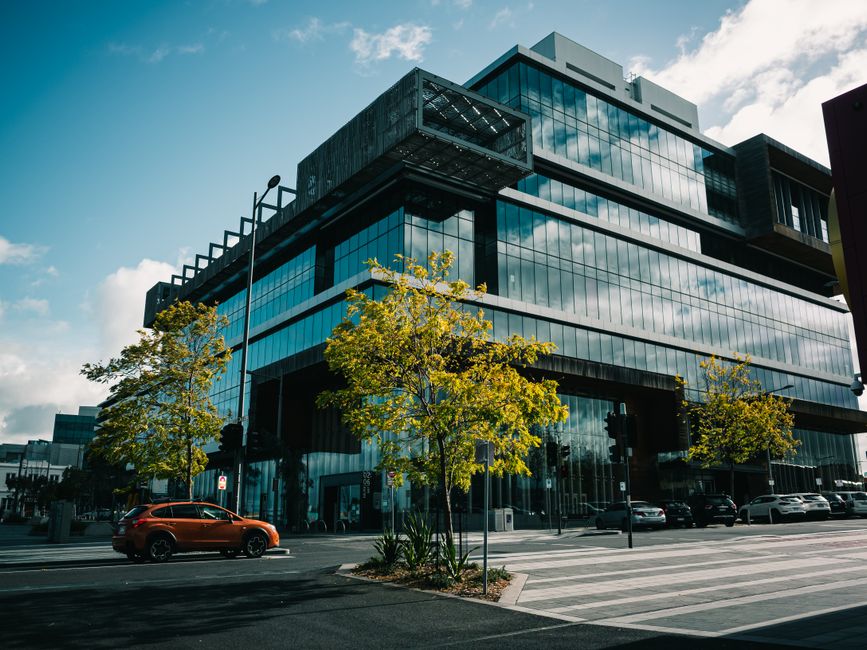
Brisbane's export-dependent businesses are confronting a sharp reality: the tentative ceasefire between the US and Iran isn't bringing supply chain relief, it's bringing uncertainty. For companies operating out of Fortitude Valley's gleaming office towers and the Port of Brisbane's sprawling container terminals, the calculus of international trade has shifted overnight.
The latest round of Middle East tensions has already pushed shipping insurance premiums up 40 per cent in the past fortnight, according to freight brokers surveyed across South Bank. For manufacturers and agribusinesses relying on the Strait of Hormuz—through which roughly a third of global seaborne oil passes—the maths is brutal. A standard 20-foot container from Brisbane to Singapore now costs an additional $800-1200 in insurance alone, with transport times potentially stretching from 14 days to 21.
"Clients are asking hard questions about inventory models they built six months ago," says one logistics director at a major freight forwarding operation near Milton. "Everything predicated on predictable shipping windows is now a guessing game."
The ripple effects are already visible. Agricultural exporters—Queensland's lifeblood, with $16 billion in annual exports—face compressed margins on grain, cotton and beef shipments. A typical Queensland feedlot operator shipping beef to the Middle East is now absorbing an extra $45-70 per tonne in logistics costs. Smaller players don't have the scale to absorb these shocks.
Brisbane's professional services sector is capitalising, however. Law firms along Queen Street are fielding frantic calls from clients seeking force majeure clause reviews and supply chain diversification strategies. Accountants are remodelling cash flow projections. Risk consultancies are fully booked.
What's crucial for Brisbane's business community right now: diversification beyond traditional Suez routing. Companies are quietly exploring alternatives—longer, more expensive Indian Ocean routes, or strategic stockpiling ahead of potential further disruptions. Some are accelerating nearshoring conversations with regional partners.
The geopolitical pause shouldn't breed complacency. Until there's genuine de-escalation—not just a tactical stand-down—Brisbane exporters should assume elevated volatility as the baseline. Those who've treated supply chain resilience as an afterthought are learning an expensive lesson. Those who pivot now retain competitive advantage. In global trade, margins matter. Right now, so does speed of adaptation.
This article was compiled by AI from the sources linked above and screened before publishing. See our editorial standards.