Brisbane's New Zoning Rules Reshape Suburb Investment Returns Dramatically
New zoning rules and infrastructure commitments are reshuffling returns across Brisbane's suburbs — and the data is telling a story some buyers didn't expect.
New zoning rules and infrastructure commitments are reshuffling returns across Brisbane's suburbs — and the data is telling a story some buyers didn't expect.
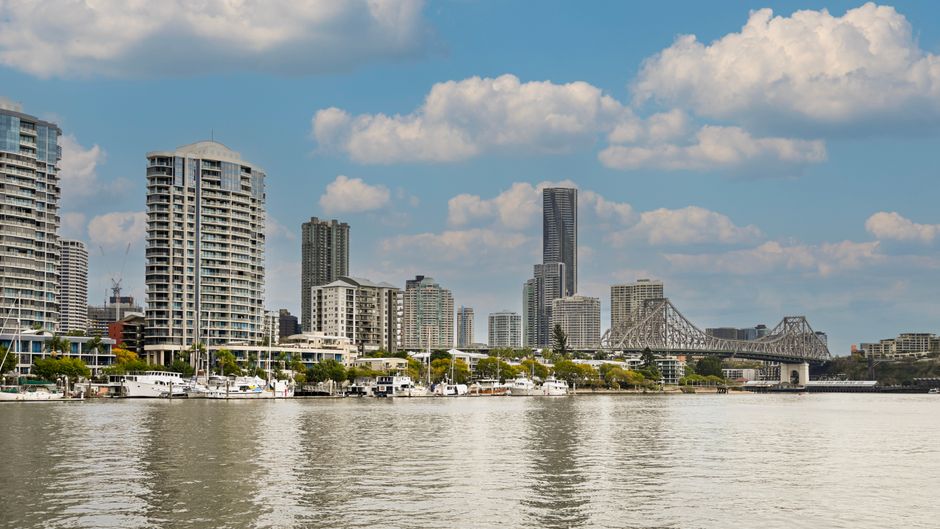
Brisbane City Council's updated planning scheme amendments, which took effect in late June 2026, have started moving the numbers in ways that matter to landlords and yield-chasing investors. The headline finding: gross rental yields in medium-density corridors newly rezoned under the council's Housing Availability and Affordability Program are running at 4.6 to 5.1 per cent — well above the Queensland-wide median dwelling yield of roughly 3.9 per cent recorded by CoreLogic in the March 2026 quarter.
That gap is not an accident. The rezoning push, which targets specific transit corridors ahead of the 2032 Brisbane Olympics infrastructure build, has unlocked development potential on previously low-density lots, attracting a surge of investor stock in suburbs where land supply was constrained for years. The timing matters because interstate migration from Victoria and New South Wales is still running hot — net arrivals into South East Queensland tracked at approximately 38,000 people in the 12 months to March 2026, according to Queensland Treasury estimates — and that population pressure is keeping vacancy rates tight even as new approvals climb.
Woolloongabba is the clearest example. Since the Cross River Rail precinct activated in mid-2025, asking rents for two-bedroom apartments along Stanley Street have climbed to around $680 per week, up from roughly $590 a year earlier. Investors who bought off the plan in 2023 in that pocket are now pencilling gross yields close to 5.3 per cent on their original purchase price — a figure that looks sharp against a Queensland median house price sitting near $780,000.
Nundah on the northside tells a similar story. The suburb sits inside the council's Nundah Village Priority Development Area, and new medium-density product on Buckland Road and surrounding streets is leasing quickly. Property management agencies operating out of the Nundah and Clayfield offices of several Queensland-based groups are reporting average days-on-market for rentals under 12 days — compared to a Brisbane-wide average closer to 18 days in late 2025.
Not every rezoned corridor is delivering the same result. Parts of the Ipswich Road corridor through Annerley and Yeronga, also flagged under the amended planning scheme, are showing yields closer to 4.1 per cent. Those suburbs have seen a heavier volume of new approvals relative to rental demand growth, which is compressing returns despite strong underlying population fundamentals. Investors buying into oversupplied pockets on the basis of rezoning alone are learning that approval density does not automatically translate to yield strength.
The practical read for investors is that proximity to confirmed Olympic infrastructure — Woolloongabba's Gabba precinct redevelopment, the Athletes' Village footprint around Northgate, and the inner-city aquatic centre corridor — is still the single most reliable predictor of sustained rental demand through the late 2020s. Queensland Treasury's own modelling, released in February 2026, projected 100,000 additional workers tied to Olympics construction and operations flowing through the South East Queensland economy between now and 2032.
Brisbane's overall median rent for houses reached $650 per week in the June 2026 quarter, according to figures from the Real Estate Institute of Queensland. That gives landlords who purchased at or below the $780,000 state median a workable yield equation — provided they are not carrying debt at the current standard variable mortgage rate, which is sitting above 6.2 per cent for most investors.
Buyers' agents working the Brisbane market are pointing clients toward the 3-kilometre ring around confirmed transport nodes: Bowen Hills, Virginia, and Coorparoo are three suburbs named repeatedly in briefings circulated this month. The common thread is zoning flexibility combined with rental stock that remains genuinely short. For investors running the numbers in mid-2026, the question is no longer whether Brisbane yields beat Sydney's sub-3 per cent figures — they do, comfortably — but whether the specific block they are buying sits in a corridor where demand growth is outpacing the approval pipeline. Right now, in the right pockets, it still does.
Advertise
Reach thousands of Brisbane readers daily. Contact us at hello@dailybrisbane.com.au to advertise.
Get in touch →Daily Network
About this article
Published by The Daily Brisbane
Daily brief
Free, in your inbox before 7am. Weekdays.
More from The Daily Brisbane
