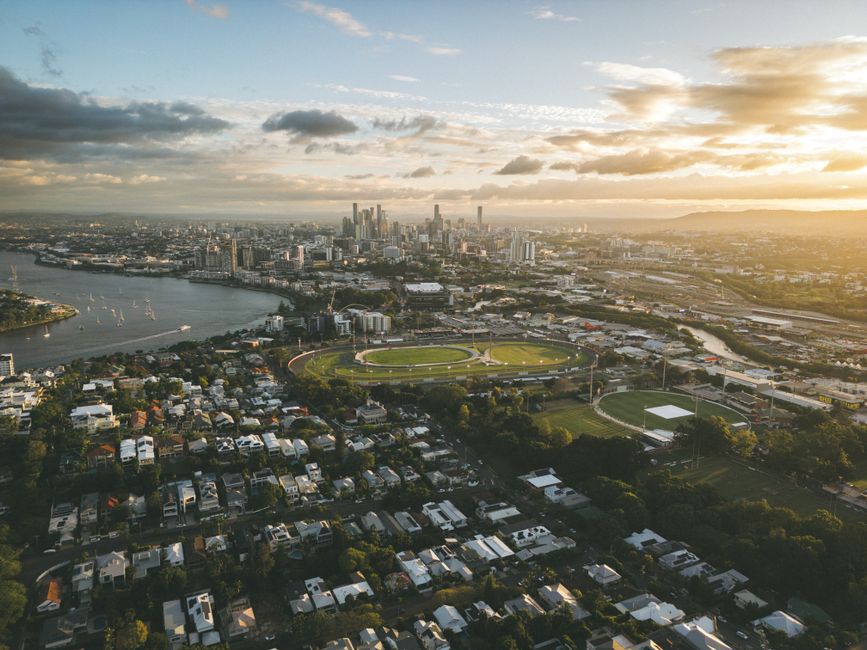
Brisbane's digital transformation agenda is entering a critical phase, with multiple infrastructure projects moving from planning into active development that will reshape how the city operates over the next two years.
The Brisbane City Council has quietly accelerated work on three flagship initiatives designed to create the backbone of a genuinely integrated smart city ecosystem. The first focuses on a unified mobility platform that will connect public transport, bike-sharing and autonomous vehicle corridors—initially targeting the South Bank precinct and expanding toward the CBD via Grey Street and North Quay.
Technical specifications released in recent procurement documents suggest the system will process real-time data from 1,200+ traffic intersections across greater Brisbane. The council budgeted A$47 million for Phase One deployment, with completion targeted for late 2027. This represents a significant jump from the A$18 million allocated to smart traffic pilots in 2024.
"We're seeing councils globally prioritise integrated data platforms over point solutions," explained Dr Sarah Kwan, director of the Queensland University of Technology's Digital Innovation Hub, during a tech forum at QUT's Kelvin Grove campus last month. "Brisbane's advantage is scale—we're large enough to achieve network effects, but nimble enough to iterate quickly."
The second pillar involves a distributed water and energy management network. Utility sensors embedded across Southbank, Spring Hill and New Farm will feed into AI-driven prediction models that optimise consumption patterns. Early trials reduced peak-hour water demand by 12 percent in pilot zones.
Perhaps most ambitious is the third initiative: a federated digital identity platform allowing residents to access council services, library systems and event bookings through a single authentication layer. Privacy advocates have scrutinised the framework, but council assurances about decentralised data architecture appear to have satisfied initial concerns raised by the Queensland Privacy Commissioner.
Industry observers note Brisbane's approach differs from east coast rivals. While Sydney has emphasised vertical integration with commercial operators, and Melbourne pursued public-private consortiums, Brisbane is building modular, interoperable infrastructure designed for future expansion.
The roadmap includes benchmarking against Singapore's Smart Nation framework and Copenhagen's Nordhavn district—both frequently cited as reference implementations. Budget documents confirm A$156 million committed across all three pillars through 2028, with federal co-investment still under negotiation.
Implementation risks remain real. Workforce upskilling, vendor lock-in concerns and integration challenges with legacy systems all present obstacles. But if executed successfully, Brisbane could establish itself as a model for mid-sized global cities navigating digital transition.
This article was compiled by AI from the sources linked above and screened before publishing. See our editorial standards.